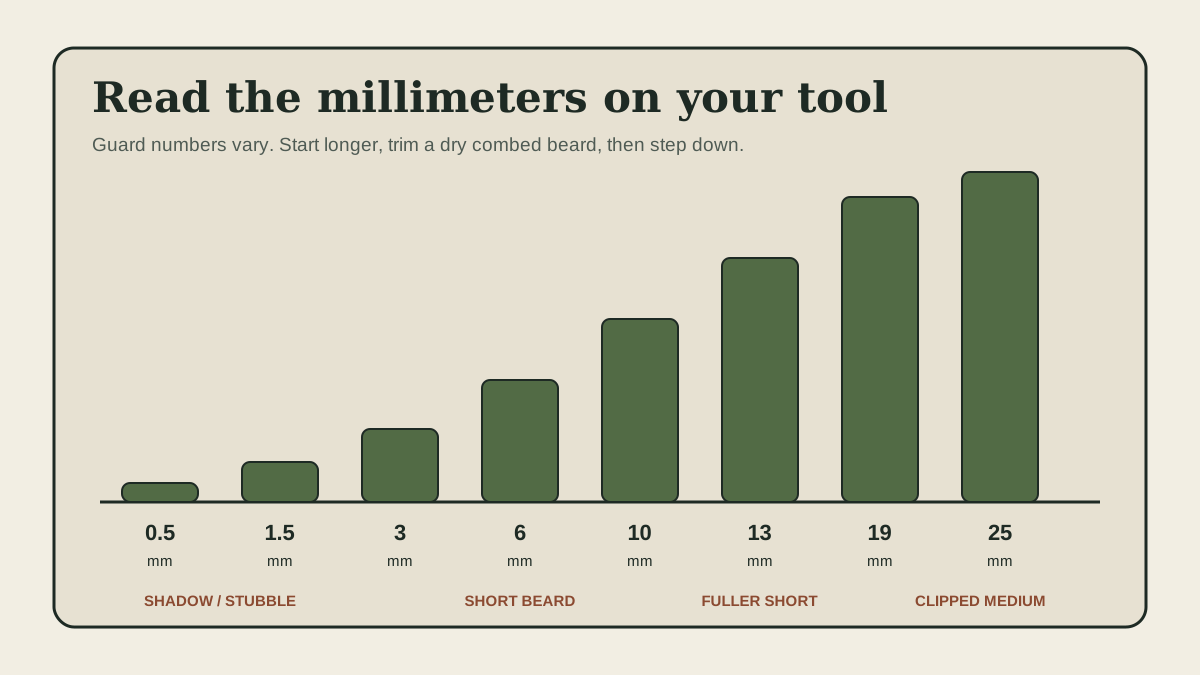
Use the millimeters printed on the actual comb, dial, or manual. Guard numbers are not universal across beard trimmers and clippers. Start longer than the target, trim a dry and combed beard with repeatable pressure, then step down one setting at a time.
Beard trimmer guard chart: use millimeters first
The number printed on a clipper comb is not a universal beard-length standard. Read the millimeters on the actual comb, dial, or product manual. Fixed clipper guards, adjustable beard-trimmer combs, blade settings, and brand-specific half sizes can all produce different labels for a similar length.
Interactive reference
What does a beard length look like in millimeters?
6 mm / 0.24 inShort beard: enough length to show growth direction while keeping the outline compact.
This is a planning aid, not a promise of finished hair height. Start longer than the target when using an unfamiliar tool.
Common clipper guard numbers and approximate lengths
| Common fixed clipper label | Approximate length | Useful beard context |
|---|---|---|
| No universal number | 0.5–2 mm | Shadow to short stubble; adjustable trimmers often use millimeter dial settings here. |
| #1 | 3 mm / 1/8 in | Short stubble or a very close beard. |
| #1½ | About 4.5–5 mm | Longer stubble; even one manufacturer lists different rounded lengths across kits. |
| #2 | About 6–6.5 mm / 1/4 in | Compact short beard. |
| #3 | About 9.5–10 mm / 3/8 in | Fuller short beard with more texture visible. |
| #4 | 13 mm / 1/2 in | Transition from short to medium beard. |
| #5–#8 | About 16–25 mm / 5/8–1 in | Medium and longer shapes; combing and sectioning matter more as length increases. |
Important: the numbered rows summarize a common Wahl clipper convention to help interpret search terms; they are not a cross-brand conversion rule. Philips and Braun currently sell beard trimmers organized around adjustable millimeter ranges and dial increments rather than the same fixed-number system.
Why the same millimeter setting can look different
| Variable | What changes | How to reduce surprises |
|---|---|---|
| With or against the grain | Against-grain passes tend to lift and cut more hair; with-grain passes can leave more bulk. | Map direction first and use the same pass direction on both sides. |
| Curl, density, and lay | The cutting length is not the same as the height the beard appears to project from the face. | Judge the dry, combed result in ordinary light. |
| Comb and blade design | A taper lever, detachable blade, flexible comb, or adjustable head can alter the effective cut. | Use the exact manual and lock the setting before each section. |
| Pressure and repeated passes | Pressing or repeatedly crossing a thin area can remove more than expected. | Use light, repeatable pressure and stop to compare the whole silhouette. |
| Wet versus dry hair | Wet hair can stretch, clump, or settle differently after drying. | Trim the beard dry unless the tool instructions explicitly say otherwise. |
A safer first pass with an unfamiliar guard
- Read the millimeter marking and the exact trimmer manual; do not translate from a remembered guard number.
- Wash only if needed, dry completely, and comb the beard into its usual position.
- Start at least one setting longer than the planned result.
- Make one with-grain pass in a less conspicuous area, then brush loose hair away.
- Compare front and three-quarter views before stepping down.
- Change one setting at a time and record the tool, comb, millimeters, and pass direction that worked.
Primary product references and limits
- Wahl USA #1 guide comb — official 1/8-inch / 3-millimeter example.
- Wahl USA Lithium Pro guide list — one current fixed-comb number sequence.
- Philips Beardtrimmer Series 5000 and Braun trimmers — current adjustable millimeter systems that show why guard numbers should not be treated as universal.
Product systems and included combs change. Sources checked July 21, 2026. This chart is an editorial planning reference; the current instructions for the exact tool in hand control.
Review and corrections note
Source-check status: July 21, 2026. Product formulas, labels, regulations, and medical guidance can change. Report a factual problem or changed source, or read the public research update log.