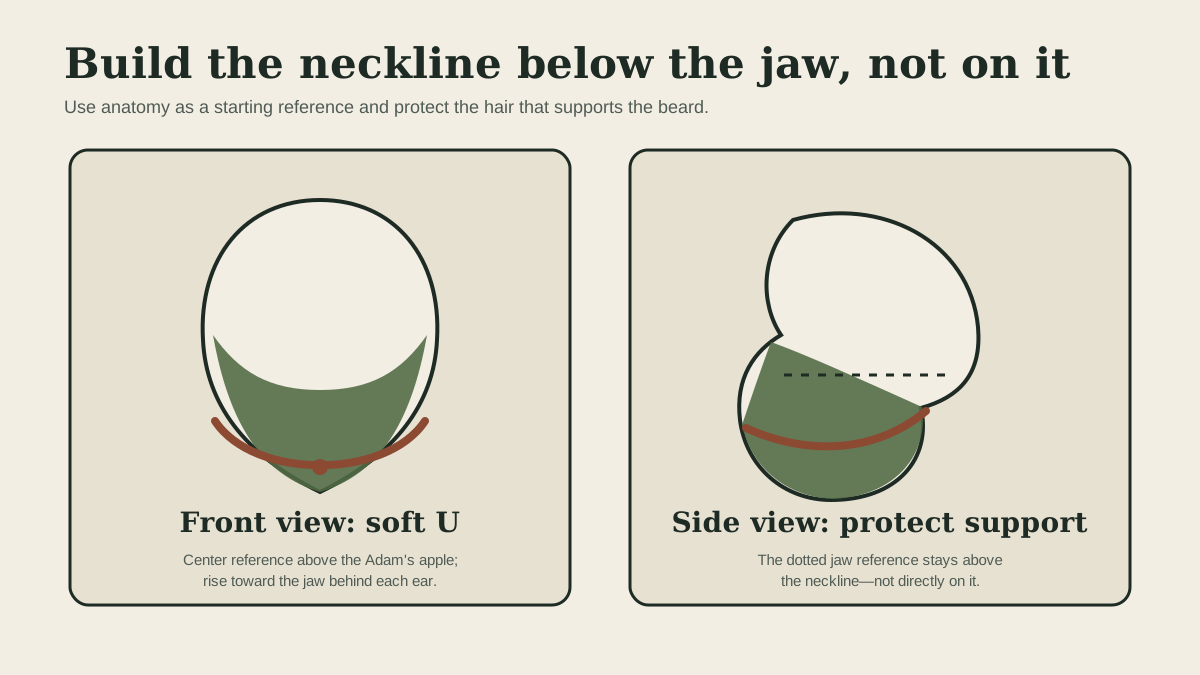
For most short-to-medium beards, start conservatively with a soft U about one to two finger widths above the Adam’s apple and let it rise toward the jaw behind each ear. Anatomy, beard length, and growth pattern change the final placement.
A good neckline supports the beard instead of cutting it away. Start with a conservative line; it is easy to take more off and hard to put it back.
Find your reference point
Look straight ahead and find a point roughly one to two finger widths above the Adam’s apple. Treat that as a starting reference, then account for neck length, beard length, and natural density.
Create a soft U, not a sharp V
Let the line rise gradually toward the jaw behind the ear. Check both sides in normal light, then step away before making corrections.
Do a dry run
Mark or visualize the line before trimming. Start below the intended edge with a longer guard, then refine only after you can see the whole silhouette.
Tidy, then leave it
Clean loose hair below the line. Avoid repeatedly redrawing it; natural density above the neck looks better with room to breathe.
Where should a beard neckline sit?
Use the one-to-two-finger reference as a starting point, not a rule stamped onto every neck. Look straight ahead, keep the chin neutral, and judge the line from the front and both three-quarter views. The neckline should support the visible beard mass without climbing onto the underside of the jaw.
| Beard length | Useful starting approach | What to protect |
|---|---|---|
| Stubble | A clean but natural lower boundary can sharpen the outline. | Avoid a line so high that it creates a thin chin strap. |
| Short beard | Build a soft U that remains visible from the front without cutting into jaw coverage. | Natural density beneath the jaw. |
| Medium beard | Keep the reference conservative; the outer beard may begin to cover the line. | Support hair that gives the beard weight and shape. |
| Long beard | The hidden under-beard and overall silhouette matter more than a sharply displayed line. | Bulk needed to prevent a hollow underside. |
Beard neckline under the chin: straight, curved, or U-shaped?
A straight horizontal line can look abrupt when the head turns, while a sharp V can point too dramatically toward the chin. A soft U usually follows the transition from neck to jaw more naturally. Treat that as an editorial grooming convention and adjust for anatomy and growth.
How to trim without cutting the neckline too high
- Comb or brush the beard into its normal dry position.
- Mark the center reference and the point behind each side of the jaw.
- Visualize the complete U before removing hair.
- Start below the intended line with a longer guard.
- Clear a narrow test area, check all three views, then refine.
- Stop after one balanced pass instead of chasing millimeter symmetry.
How to fix a beard neckline that is too high
Do not keep raising the opposite side to match. Leave the current upper beard alone and allow the lower edge to regrow. During the transition, keep only obvious neck strays below the new conservative reference. Shortening the whole beard slightly can reduce contrast, but time—not another corrective pass—is what restores the missing line.
Use the face-style finder, plan the first beard trim, and review razor-bump reduction around beard lines. The placement framework is editorial. Skin-care and shaving safety context follows the American Academy of Dermatology’s razor-bump guidance. Source checked July 20, 2026.
Cheek line and neckline: two different jobs
| Boundary | Its job | Conservative first move |
|---|---|---|
| Cheek line | Frames upper growth and preserves visible side density. | Remove isolated strays above the dependable natural edge. |
| Neckline | Supports the beard from below and separates it from lower-neck growth. | Visualize a soft U and clear a narrow test area below it. |
Set both boundaries before shortening the beard. If the upper line is uncertain, use the cheek-line guide. If the overall length is uncertain, use the millimeter-first trimmer chart and start longer than the target.
Review and corrections note
Source-check status: July 20, 2026. Product formulas, labels, regulations, and medical guidance can change. Report a factual problem or changed source, or read the public research update log.