Let the natural cheek boundary appear, remove isolated strays above the dense edge, and keep any defined line as high as dependable growth allows. Lower the line gradually, compare both sides from a distance, and do not chase perfect symmetry.
Where should a beard cheek line sit?
Start by letting the natural cheek boundary become visible. Remove isolated hairs above the dense, repeatable edge before redrawing the entire line. If you want a defined cheek, visualize a gradual path from the sideburn toward the mustache connection and keep it as high as dependable growth allows.
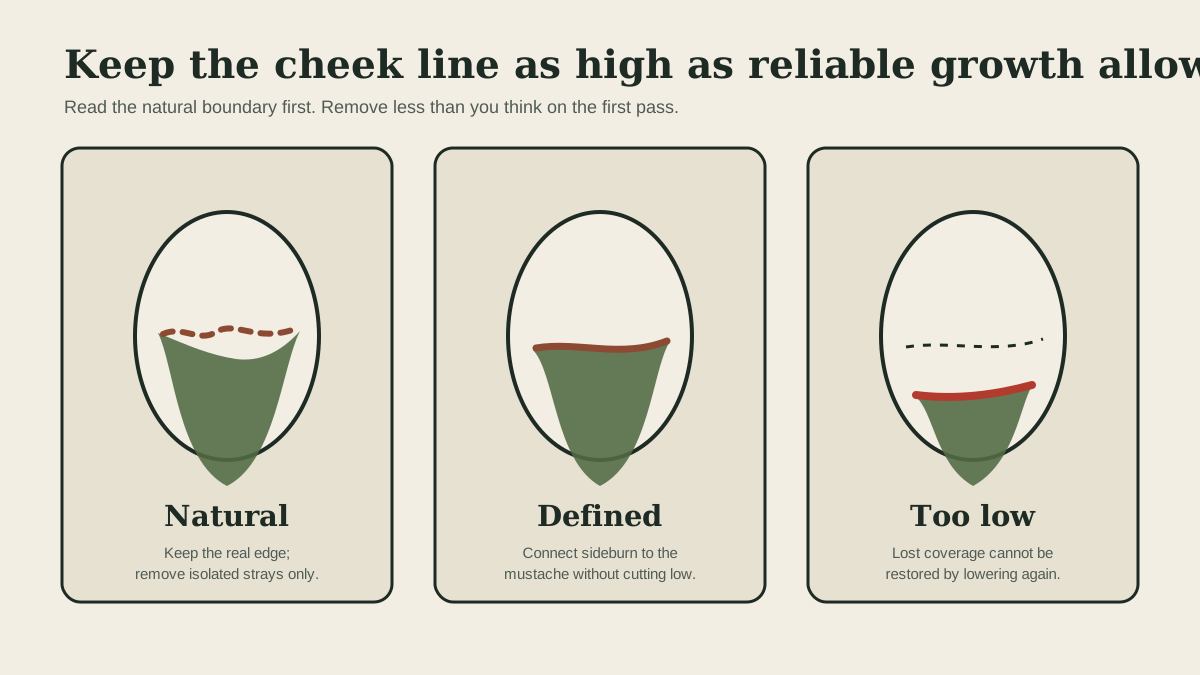
Natural, defined, or too low?
| Line | What it does | Useful when | Main risk |
|---|---|---|---|
| Natural with stray cleanup | Keeps the dense boundary and removes only isolated hairs above it. | Growth is uneven, the beard is still developing, or maintenance should stay low. | Cleaning farther down every session until the line is no longer natural. |
| Gently defined | Creates a deliberate, gradual edge from sideburn toward the mustache area. | Coverage is reliable enough to repeat the line and a sharper finish is wanted. | Using a ruler-straight line that fights curl, direction, or facial movement. |
| Too low | Removes the upper support hair and can make the beard look narrower or disconnected. | Rarely a useful correction; it is usually the result of chasing symmetry. | Each correction lowers the other side and lengthens the regrowth period. |
Choose the line by density, length, and maintenance
- Sparse or irregular upper cheeks: preserve every dependable cluster and remove only clear outliers. A natural boundary often looks more intentional than a low geometric line.
- Dense short beard: a gently defined line can sharpen the silhouette, but keep it high enough that normal facial movement does not expose a hollow band.
- Curly or directional growth: comb into the normal dry position before deciding which hairs actually sit above the boundary.
- Medium or long beard: judge the cheek line as part of the full side profile. A slightly softer line can support a larger silhouette.
- Low-maintenance goal: choose a boundary you can reproduce by removing outliers, not a line that requires frequent complete shaving.
How to shape a beard cheek line without taking it too low
- Let several days of growth reveal the repeatable boundary.
- Dry and comb the beard into its normal direction.
- Mark the obvious isolated hairs above the dense line; leave connected growth alone.
- For a defined result, visualize a gradual sideburn-to-mustache path rather than cutting straight across one mirror angle.
- Trim or shave from the outside toward the planned edge, clearing a narrow area first.
- Step back, relax the face, and compare both sides in the same light.
- Stop with small differences intact. Natural cheeks and facial structure are not perfectly mirrored.
How to repair a cheek line cut too low
Do not lower the fuller side to match. Stop defining the upper edge and let the missing strip regrow. During the transition, clean only obvious hairs well above the new intended boundary. A slightly shorter overall beard can reduce contrast, but no styling product replaces removed density.
Cheek-line sources and skin boundary
Philips describes natural and defined options and uses a sideburn-to-mustache visual path; Wahl recommends removing strays above the natural cheek line. Those are grooming conventions, not anatomy rules. The conservative framework here prioritizes repeatable growth and reversibility.
- Philips: how to trim a cheek line.
- Wahl: how to trim a beard.
- American Academy of Dermatology: razor-bump remedies — lower-friction shaving context when close edge work causes bumps.
Sources checked July 21, 2026. If close shaving repeatedly causes painful or pus-filled bumps, spreading redness, broken skin, or scarring, stop treating the edge as an ordinary styling problem and seek qualified care.
Review and corrections note
Source-check status: July 21, 2026. Product formulas, labels, regulations, and medical guidance can change. Report a factual problem or changed source, or read the public research update log.